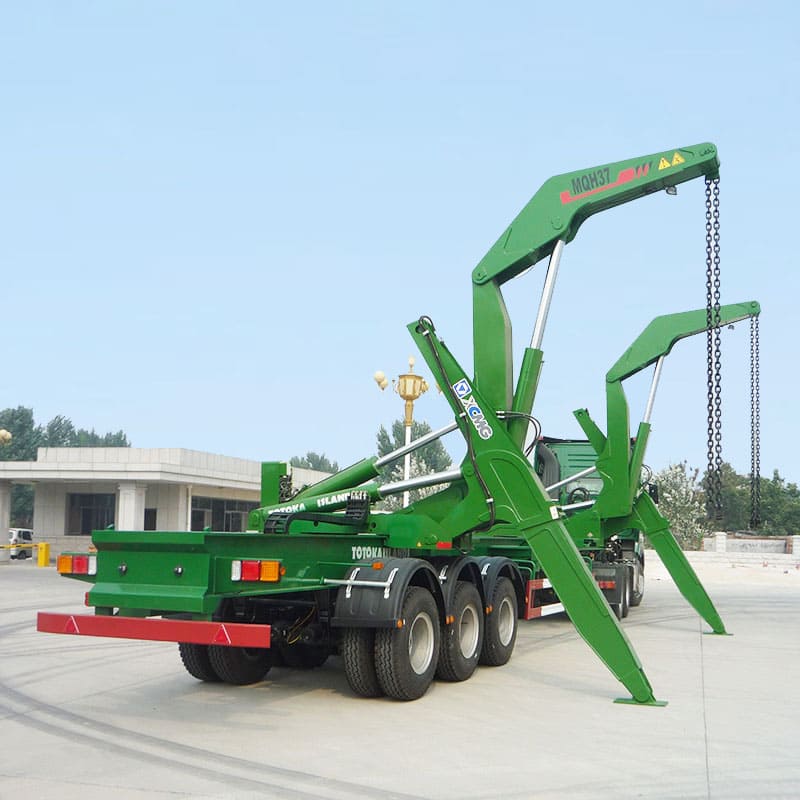
In global freight and container transport, the 40 ft flatbed trailer is one of the most common and versatile trailer types. It’s long enough for standard 40 ft containers and oversized cargo, but still easy to operate on highways, ports and job sites. Understanding 40 ft trailer dimensions, capacity and specifications helps you plan loads safely, choose the right trailer and comply with local road regulations.
This guide explains the exact dimensions, payload capacity and technical specifications of a 40 ft flatbed trailer, using Panda Mech’s standard 3-axle 40 ft flatbed semi trailer as a reference.

40 Ft Trailer Dimensions (Metric & Imperial Overview)
Standard 40 Ft Flatbed Trailer Dimensions
Below are typical dimensions for a Panda Mech 40 ft flatbed semi trailer with 3 axles:
-
Overall length:
-
Approx. 12,500 mm
-
≈ 40 ft (41.0 ft including front/rear structure)
-
-
Overall width:
-
2,500 mm
-
≈ 8.2 ft (about 98–100″)
-
-
Deck (platform) height from ground:
-
1,500 mm
-
≈ 4.9 ft (about 59″)
-
-
Deck length (usable loading length):
-
About 12.2–12.5 m (40–41 ft)
-
-
Kingpin position:
-
Typically 1,200–1,500 mm from the front (customizable)
-
-
Axle spacing:
-
Usually 1,310–1,350 mm between axles (customizable for different regulations)
-
These dimensions can be fine-tuned according to customer requirements and local regulations, but this is the standard 40 ft trailer dimension profile used for most 3-axle flatbed trailers from Panda Mech.
40 Ft Trailer Dimensions in Meters
If you mainly work with metric units, the 40 ft flatbed trailer dimensions in meters are:
-
Length: about 12.5 m
-
Width: 2.5 m
-
Deck height: 1.5 m
-
Deck area: approx. 31.25 m² (12.5 m × 2.5 m)
This size is optimized to carry one 40 ft ISO container or two 20 ft ISO containers using standard twist locks, while keeping within typical international road width limits (2.5 m).
40 Ft Trailer Dimensions in Feet and Inches
For imperial users, the 40 ft trailer dimensions in feet and inches can be summarized as:
-
Length:
-
Approx. 40 ft overall (deck length ~40–41 ft / 480–492″)
-
-
Width:
-
About 8.2 ft (≈ 98″ deck width)
-
-
Deck height from ground:
-
Approx. 4.9 ft (≈ 59″)
-
Exact figures can vary slightly among manufacturers and configurations, but this range covers most standard 40 ft flatbed designs used in global logistics.
40 Ft Trailer Capacity (Payload, Axles & Load Limits)
Standard 40 Ft Trailer Payload Capacity
A standard 40 ft flatbed trailer from Panda Mech is designed for heavy-duty freight:
-
Typical payload capacity:
-
Around 40–60 tons (40,000–60,000 kg) for most 3-axle configurations
-
-
Heavy-duty versions:
-
Can be engineered up to 70–80 tons, depending on:
-
Axle count & rating
-
Main beam specification
-
Local road laws and bridge formulas
-
-
The legal load limit in real operation is usually determined by your local road regulations, not only by the trailer’s structural capacity.
How Much Weight Can a 40 Ft Trailer Carry?
In practical use, a 40 ft flatbed trailer usually carries about 40–60 tons of cargo.
For most routes, a 3-axle 40 ft trailer is operated around 40–45 tons gross payload to comply with typical national weight limits. If you need to move super heavy machinery or steel, Panda Mech can design multi-axle heavy-duty versions with higher structural capacity, subject to local regulations and permit requirements.
Axle Configurations and Legal Load Limits
Common axle configurations for a 40 ft flatbed trailer include:
-
2 axles:
-
For medium loads, often up to ~30–40 tons
-
Lower tare weight, suitable for markets with strict weight rules but lighter cargo
-
-
3 axles (most common):
-
Standard 40–60 ton design
-
Best balance between payload, stability, tire life and cost
-
-
4 axles (heavy-duty):
-
For heavy or super heavy cargo up to 70–80 tons
-
Used where local regulations and road conditions allow higher axle counts
-
Even if the trailer is designed for higher load, you must always check combined gross weight limits (tractor + trailer + cargo) defined by your country’s transport authority.
Typical Cargo for a 40 Ft Flatbed Trailer
A 40 ft flatbed is extremely versatile. Typical cargo includes:
-
ISO containers:
-
1 × 40 ft container
-
2 × 20 ft containers
-
-
Steel products:
-
Steel coils, plates, pipes, beams
-
-
Construction materials:
-
Cement, bricks, timber, scaffolding, prefabricated components
-
-
Agricultural equipment:
-
Tractors, harvesters, sprayers, balers
-
-
Industrial machinery:
-
CNC machines, tanks, compressors, turbines, generators
-
-
Project cargo & oversized loads:
-
Equipment that does not fit in an enclosed trailer
-
40 Ft Trailer Specifications (Panda Mech Standard Spec)
Main Frame and Deck Specifications
Using Panda Mech’s typical 3-axle 40 ft flatbed as an example:
-
Main beam:
-
Material: Q345B high-strength low alloy steel (or equivalent)
-
Flange thickness:
-
Top flange: ~14 mm
-
Web: ~8 mm
-
Bottom flange: ~16 mm
-
-
-
Chassis frame:
-
High-strength steel, thickness 3–6 mm depending on area
-
Full-penetration welding with strict quality control
-
-
Deck surface:
-
Anti-slip checkered steel plate (~3 mm)
-
Designed to resist local concentrated loads from forklifts, coils or machinery
-
This structure gives the trailer high bending resistance and durability for long-term heavy-duty operation.
Axles, Suspension and Tires
-
Axles:
-
3 × 13T square axles (e.g. 150 × 150 mm)
-
Rated capacity 13 tons per axle
-
-
Suspension:
-
Standard: heavy-duty mechanical leaf-spring suspension
-
Typical: 10-leaf spring, 90 mm wide, 13 mm thick
-
-
Optional: air suspension or bogie suspension for better ride and load equalization
-
-
Tires:
-
Typical size: 12R22.5 or 11.00R20, 12 pieces
-
Branded tires (Triangle, Hankook, Bridgestone or selected Chinese brands) based on customer choice
-
-
Rims:
-
9.00 × 22.5, 10-hole ISO standard, 12 pieces
-
These specifications can be customized depending on market preference and load requirements.
Braking and Electrical Systems
-
Brake system:
-
Dual-line air brake system, connected to the tractor
-
WABCO relay emergency valve or equivalent for safe braking
-
Brake chambers:
-
Type 30/30 on rear axles
-
Type 30 on front axle
-
-
-
Parking brake:
-
Mechanical parking brakes on trailer axles, manually actuated
-
-
Electrical system:
-
24V lighting system with modular wiring harness
-
7-way ISO electrical socket
-
Lights include:
-
Tail lights
-
Brake lights
-
Turn indicators
-
Side markers
-
Number plate light
-
Rear reflectors and side reflectors
-
-
Kingpin, Landing Gear and Twist Locks
-
Kingpin:
-
2″ bolt-in kingpin, high tensile steel (3.5″ optional for heavy-duty)
-
-
Landing gear (landing legs):
-
One pair of two-speed landing legs, capacity commonly 28T or higher
-
Branded components (e.g. York or equivalent) are often used
-
-
Twist locks:
-
Typically 8–12 sets of ISO standard twist locks
-
Positioned to lock:
-
1 × 40 ft container, or
-
2 × 20 ft containers
-
-
-
Accessories:
-
Spare tire carrier (usually 2 sets)
-
Tool box (around 1 m length)
-
Side guards for safety
-
40 Ft Trailer Types & Options
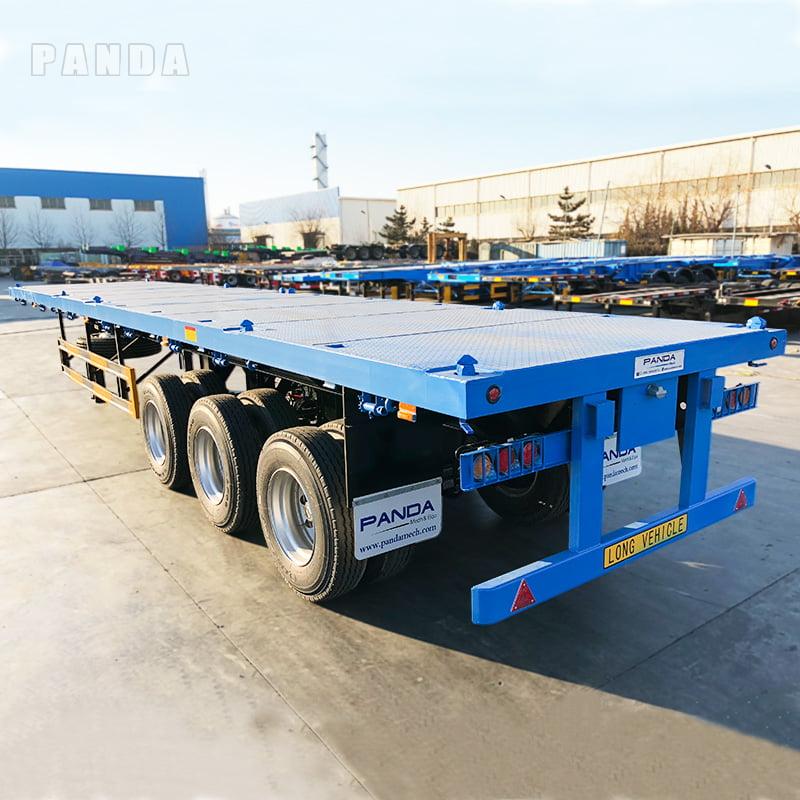
40 Ft Flatbed Semi Trailer
This is the standard Panda Mech 40 ft flatbed:
-
Open deck, no side walls or roof
-
Optimized for steel, machinery, construction materials and containers
-
Can be built as normal flatbed, front-wall flatbed, or with removable stake sides
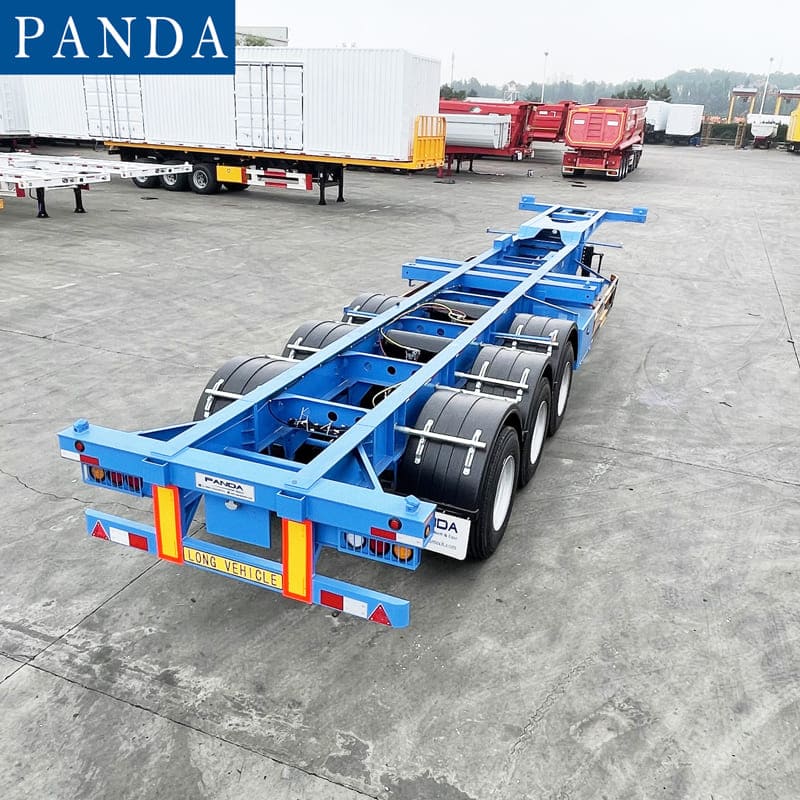
40 Ft Skeletal Container Chassis
A skeletal trailer (container chassis) has:
-
Only the frame and container locks, no solid deck
-
Very light tare weight, ideal for container transport
-
Designed for 1 × 40 ft or 2 × 20 ft containers
40 Ft Dry Van / Container Trailer
A dry van or box trailer is:
-
Fully enclosed with roof, side walls and doors
-
Used for palletized goods, general cargo needing weather protection
-
Standard sizes: 40 ft container, 45 ft, 48 ft, 53 ft box trailers
40 Ft Gooseneck and Hot Shot Trailers
-
Gooseneck flatbed trailers:
-
Often used in North American hot shot trucking
-
Connect to a pickup or small truck via gooseneck hitch
-
Lengths like 30–40 ft with high GVWR
-
-
Hot shot trailers:
-
Lower deck height
-
Designed for long but relatively lighter loads (e.g. 15,000 lbs)
-
While Panda Mech focuses on semi-trailers (flatbed, skeletal, chassis, lowbed, tipper, side loader, etc.), these other 40 ft configurations show how the same length can serve different industries.
Applications of a 40 Ft Flatbed Trailer
Container and Intermodal Transport
-
Transport 20 ft and 40 ft ISO containers between ports, yards and factories
-
Suitable for multimodal operations: ship – rail – truck
Construction and Building Materials
-
Steel pipes, beams, rebar
-
Cement, bricks, tiles, prefabricated panels
-
Scaffolding and structural components
Agricultural Machinery and Equipment
-
Tractors, harvesters, sprayers, balers
-
Farm implements and large agricultural machines
Industrial Machinery and Project Cargo
-
CNC machines, pressure vessels, heat exchangers
-
Turbines, generators, transformers
-
Project cargo for mining, energy and infrastructure
40 Ft Trailer Turning Radius & Road Requirements
Overall Length and Width of a 40 Ft Truck–Trailer Combination
A typical tractor + 40 ft semi trailer combination has:
-
Overall vehicle length: roughly 13.5–16 m (45–52 ft), depending on tractor wheelbase and front overhang
-
Overall width: around 2.5 m (8.2 ft), within standard road limits
-
Overall height: usually 4.0 m (≈13 ft) or less, depending on cargo
These dimensions are important for yard layout, gate width and parking design.
40 Ft Trailer Turning Radius (Inner and Outer)
For a medium-sized semi truck with a 40 ft wheelbase:
-
Minimum inner turning radius: about 5.9 m (≈19’4″)
-
Minimum outer turning radius: about 12.2–12.4 m (≈40’–40’10”)
When planning factory yards, warehouse driveways or loading docks, you should ensure enough turning space based on these typical values, plus a safety margin.
Yard, Warehouse and Dock Space Requirements
When using a 40 ft semi trailer, consider:
-
Roadway width: sufficient for truck + trailer to pass and turn
-
Turning bays and cul-de-sacs: designed with outer radius ≥12–13 m
-
Dock layout: enough straight approach length for backing into docks
-
No tight obstacles: avoid trees, poles or walls close to turning paths
Proper planning reduces maneuvering time, accident risk and damage to vehicles and infrastructure.
40 Ft Trailer vs 20 / 45 / 48 / 53 Ft Trailers
Trailer Dimension Comparison Table
A simplified comparison:
| Trailer Type | Length (ft) | Width (ft) | Typical Max Load (tons) | Typical Use |
|---|---|---|---|---|
| 20 ft flatbed trailer | 20 | 8.2 | 30–40 | Short loads, urban delivery, light cargo |
| 40 ft flatbed trailer | 40 | 8.2 | 40–60 (up to 80) | Containers, general heavy cargo |
| 45 ft flatbed trailer | 45 | 8.2 | 70–85 (heavy spec) | Larger project cargo, regional rules |
| 48 ft flatbed trailer | 48 | 8.2 | 45–65 | North American freight, long materials |
| 53 ft flatbed trailer | 53 | 8.2 | 60+ (heavy spec) | Maximum deck length, long-haul operations |
The 40 ft size is considered an excellent balance between volume, maneuverability and compatibility with ISO containers.
When to Choose a 40 Ft Trailer Instead of Other Sizes
A 40 ft flatbed is ideal when:
-
You frequently transport 40 ft or 2 × 20 ft containers
-
You need good payload but also easier maneuverability than 45/48/53 ft trailers
-
You serve ports, terminals and cross-border routes where 40 ft is standard
-
Your yards and roads are designed around container dimensions
If your main requirement is maximum deck length (e.g. very long steel beams) and you operate mainly in markets like North America, a 48 ft or 53 ft flatbed may be more suitable.
Custom 40 Ft Trailer Specifications (Options from Panda Mech)
Custom Length, Axles and Suspension
Panda Mech can customize:
-
Length: 40 ft standard, with options close to 45 ft / 48 ft / 53 ft based on local rules
-
Axles: 2, 3 or 4 axles, different axle brands and ratings
-
Suspension:
-
Mechanical leaf-spring
-
Air suspension
-
Bogie or special suspension for rough roads
-
Material Options and Surface Treatment
-
Main beam steel: Q345B, Q550, or higher grades according to load level
-
Deck material:
-
Standard steel checkered plate
-
Optional wood inserts or special surface if required
-
-
Surface treatment:
-
Sandblasting
-
Anti-corrosive primer
-
2 layers of top coat
-
Optional special coatings for coastal or harsh environments
-
Accessories and Functional Upgrades
Custom options include:
-
Front wall height and design
-
Removable side stakes or side walls
-
Container locks layout (20 ft / 40 ft / 45 ft)
-
Tool boxes, spare tire carriers, ladder
-
Hydraulic or mechanical ramps for machinery loading
-
Extra lashing rings, rope hooks, stake pockets
-
ABS, EBS, load-sensing valves and telematics options
How to Choose the Right 40 Ft Trailer for Your Cargo
Match Trailer Size and Capacity to Your Cargo
-
Confirm maximum cargo weight and choose the correct axle configuration
-
Check cargo length, width and height vs. deck size and legal limits
-
Identify whether you need container twist locks, coil wells or special supports
Consider Road Regulations and Operating Environment
-
Understand local GVW and axle load limits
-
Check overall length and height restrictions on main routes
-
Consider road and yard conditions (good highways vs. rough roads) when choosing suspension and tire options
Total Cost of Ownership and After-Sales Support
-
Evaluate not only purchase price, but also:
-
Fuel consumption (related to tare weight)
-
Tire and brake wear
-
Maintenance intervals
-
Availability of spare parts and service
-
Choosing a reliable manufacturer like Panda Mech, with experience in exporting to multiple regions, helps reduce risk and long-term operating cost.
40Ft trailer dimension
40 Ft trailer dimension: 12,500mm×2,500mm×1,500mm (can be designed)
40 Ft low bed trailer dimensions: 12,500×3,000 ×1,800 mm (can be designed)
40 Ft truck dimensions in meters: 12.5m×3m×1.4m-2m (can be designed)
Maybe you want more:
20 Feet trailer dimensions: 9500×2500×1500mm(can be designed)
20 Ft flatbed trailer dimensions: 9500x2500x1500 mm
40Ft trailer dimension(in meters)
12.5mx2.5mx1.5m
40 Ft trailer dimensions in feet
41x8x4.9 feet
40 ft trailer height from ground
1500mm, 1.5 meter
40 Feet trailer dimensions india
12500-13500×2500-3000×1200-1500mm
40 Feet trailer weight
40 ft trailer empty weight: 6.5-9 ton

40 Ft trailer capacity
40Ft truck capacity: 74-ton
Maybe you want to know more:
20 Foot flatbed trailer weight: 6.5 ton
40 Ft gooseneck trailer weight capacity: 8 ton
53 Foot trailer weight: 9.5 ton
Related: Flatbed Trailer Dimensions
-

-
40 Ft Flatbed Semi Trailer For Sale
$8,990.00 -
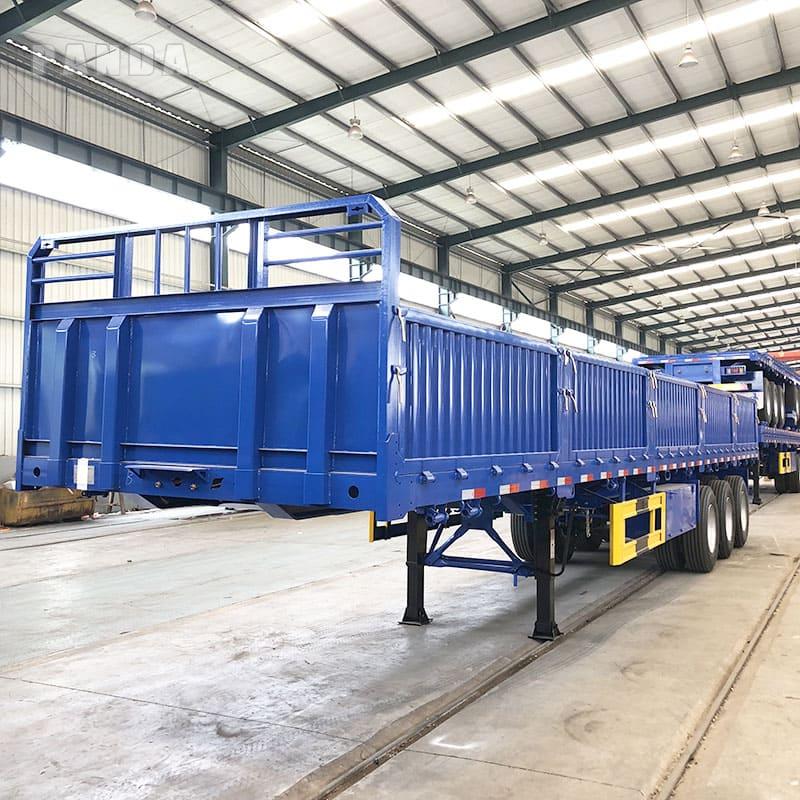
40Ft Drop Side Trailers For Sale
$13,900.00