What are tank trucks and tank trailers?
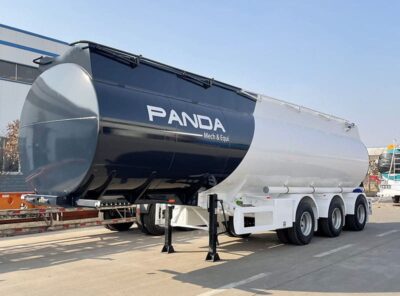
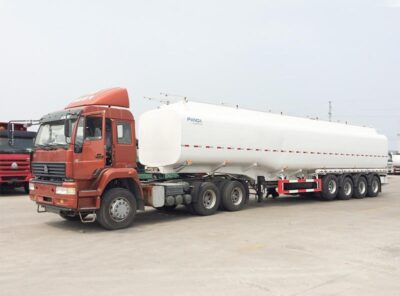
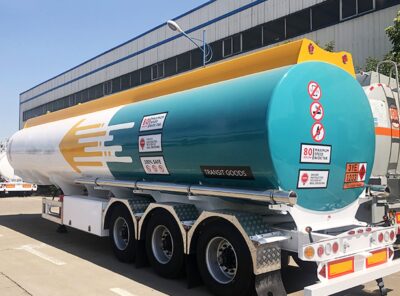
If you’re trying to plan deliveries or compare specs, here’s the simple way to think about it: a tank truck (rigid tanker) is usually for shorter routes and smaller loads, while a tank trailer (tanker semi-trailer) is built for long-haul and higher volume. In practical terms, tank trucks typically sit around 10,000–30,000 litres, and fuel tank trailers are commonly 30,000–60,000 litres. The “right” number depends on axle/GVW limits, compartment count, and local regulations—so always match capacity to your route.

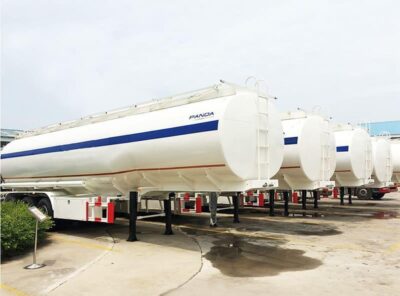
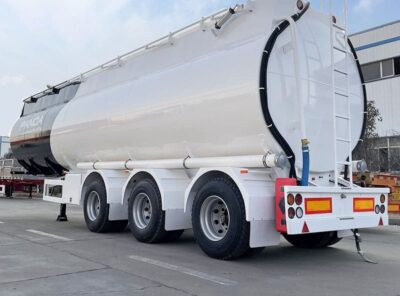
fuel tank trailer
How Many Litres Does a Tank Truck Hold? (Typical Range + Gallons)
Most buyers will see tank truck capacity in the 10,000–30,000-litre range (about 2,641–7,925 US gallons). If your route is urban and stops are frequent, smaller rigid tank trucks are common. If you’re running heavier chassis setups (often 8×4) and regulations allow it, you can push closer to the 30,000-litre end. The limiting factors are usually legal GVW, axle configuration, and tank design—not just “how big the tank looks.”
How Many Litres Does a Fuel Tank Trailer Hold? (Typical Range + Gallons)
For long-distance fuel delivery, fuel tank trailer capacity is commonly 30,000–60,000 litres (about 7,925–15,850 US gallons). If you’re seeing “60,000 litres” in specs, that’s usually a long-haul setup where axle/GVW limits and permits make it legal. The biggest real-world variables are compartments (often 2–10), legal weight limits, and what liquid you’re hauling—because density affects payload planning.
Average Tanker Capacity (What You’ll See Most Often)
If you just want the “most common” spec to benchmark against, 40,000–45,000 litres is a typical mid-size fuel tanker trailer range in many projects. Still, your practical limit will come down to legal gross weight, axle setup, and compartment design—so treat this as a planning reference, not a universal standard.
18-Wheeler Tanker Capacity
When people search this, they often mean the tanker’s cargo capacity—not the tractor’s fuel tank. For an 18-wheeler tanker (tractor + tanker trailer), a common working range is 30,000–40,000 litres, with higher capacities possible only when axle/GVW rules and local regulations allow it.
10,000-Gallon Tanker Truck Dimensions (Typical Reference)
A typical 10,000-gallon tanker reference size is around 11,500 × 2,500 × 3,500 mm (L×W×H). Use this as a rough sizing check—final dimensions change with chassis choice, tank shape, and compartment layout.
22 Wheeler truck fuel tank capacity
A 22-wheeler tanker is often used when operators need higher legal payload. In many cases, capacity falls around 40,000–60,000 litres (about 8,799–13,198 gallons), depending on axle count, legal GVW, and compartment design.
Fuel tanker trailer specifications
Here’s a quick reference spec. If you’re comparing suppliers, focus on the lines that usually decide real capacity and compliance: volume range, compartments, axle setup, and standards (ADR if required). Final specs are customized to your route and regulations.
| Item | 30,000-60,000 liters fuel tanker |
| Dimension | 7500-14500*2500*3500-3800 mm (Reference, customized according to needs) |
| Capacity / volume | 30,000-60,000 liters, 7925-15850 US gallons |
| Compartment | 2-10 |
| Payload | 39-41T (Reference) |
| Weight | 10.6T |
| Material | Iron Steel, Stainless Steel, aluminum |
| Chassis | High Strength Steel |
| Valve | Civacon, EMCO, HELI, JLME, HENGE |
| Axle | 2/3/4 axle; BPW, FUWA, L1, HO’S, SAF, PDME |
| Suspension | Air suspension, Mechanical, Bogie |
| Brake system | Dual Line brake system, T30/30 Chamber, Wabco emergency valve, ABS/EBS optional |
| Parts | Mudguard, Ladder, 1 standard toolbox, 1 coat of anticorrosive prime, 2 coats of final paint, Polyurethane paint, Landing gear, 9.0-22.5 steel wheel rim, Fire extinguisher, 4-inch Pneumatic bottom valve, 500mm Aluminum alloy manhole cover, Q345/6mm steel sheet, conforming ADR (According to customer needs) |
| Application | Fuel, Oil, Crude Oil, Diesel, Petrol, Petroleum, Gasoline |
Can a tank trailer transport different liquids at the same time?
Yes—multi-compartment tankers can carry different liquids at the same time, because each compartment is isolated. This is especially useful for fuel distribution (for example diesel + petrol grades) since it reduces empty return miles and improves route efficiency. Just remember: compartments can be different sizes, so your loading plan matters.
Safety measures
Fuel transport is high-stakes, so buyers usually check safety features early. Key points include stability (liquid surge control), braking performance, safe loading/unloading, and static control. During loading, grounding/bonding helps reduce static-spark risk, and compliance requirements (like ADR, when applicable) can determine which valves, sensors, and recovery systems are mandatory.
Application
If you’re deciding between the two, here’s the reader-friendly rule of thumb:
- Choose a tank truck when your routes are shorter and you need frequent deliveries.
- Choose a tank trailer when you need long-haul capacity and fewer, larger drops.
Both can transport diesel, petrol/gasoline, kerosene, and crude oil, but the best build depends on what liquid you haul and which compliance standard your market requires.

Materials & Tank Types
Most readers care about materials for one reason: it affects payload, maintenance, and what you can legally carry.
- Carbon steel is common for diesel/petrol and many industrial liquids.
- Aluminum alloy helps reduce tare weight, improving payload efficiency under GVW limits.
- Stainless steel is often chosen for food-grade liquids (water, edible oils) or when corrosion resistance is critical.

Weight
Tare weight matters because it directly impacts legal payload. A typical tanker trailer tare weight can be around 10.6 tons (varies by build). If your market has strict GVW limits, lighter materials (like aluminum) can improve efficiency. If corrosion resistance or food-grade use is the priority, stainless steel may be the better long-term choice.
Key Parts That Affect Safety & Compliance (Quick Checklist)
Tank Shape (Round / Oval / Square)
Most fuel tankers use round or oval tanks because they handle liquid surge better and are easier to clean. Square tanks are less common for fuel and are usually chosen for special layout or capacity needs.
Vapor Recovery System (If Required by Your Market)
A vapor recovery system reduces fuel vapor emissions during loading/unloading. In some markets and terminals, it’s required for compliance. If your route includes regulated depots or urban delivery zones, confirm whether vapor recovery ports and piping are mandatory before finalizing the tanker spec.
Breather / Vent Valve (Leak Prevention + Pressure Control)
This valve helps manage pressure changes in the tank and reduces leak risk during operation. For fuel transport, buyers usually confirm it meets local safety requirements and works with the tanker’s loading/unloading method.
Level Gauge (Know What’s Inside, Safely)
A level gauge (or dipstick-style indicator) helps operators verify the liquid level during loading and inspection. If you’re running multi-compartment deliveries, clear level indication makes loading more accurate and reduces overfill risk.

Bottom Valve / Emergency Shut-Off Valve (Critical Safety Part)
This is one of the most important safety components on a fuel tanker. It’s installed at the bottom outlet and supports bottom loading/unloading. In an accident, the valve is designed to shut off quickly to reduce the risk of fuel discharge. If your operations require bottom loading (common in many fuel terminals), make sure this valve type is specified clearly in the quote.
Safety / Pressure Relief Valve (For Pressure Control)
A pressure relief valve protects the tank from abnormal pressure conditions. The opening pressure must match your operating requirements and local standards—especially if your tanker is designed for specific loading systems or regulated routes.

Anti-Overfill Sensor (Stops Overfilling Before It Happens)
An anti-overfill sensor triggers an alarm (and can cut off filling, depending on system) when the liquid reaches the safety limit. For fuel operations, this is a high-value feature because it reduces spill risk and helps meet safety requirements at many terminals.
Reader Tip: If your main goal is to compare capacity (litres/gallons), focus first on axles/GVW + compartments + volume. Use the checklist above to confirm safety and compliance items that can change cost and approval.
What are the commonly used tank trailers?
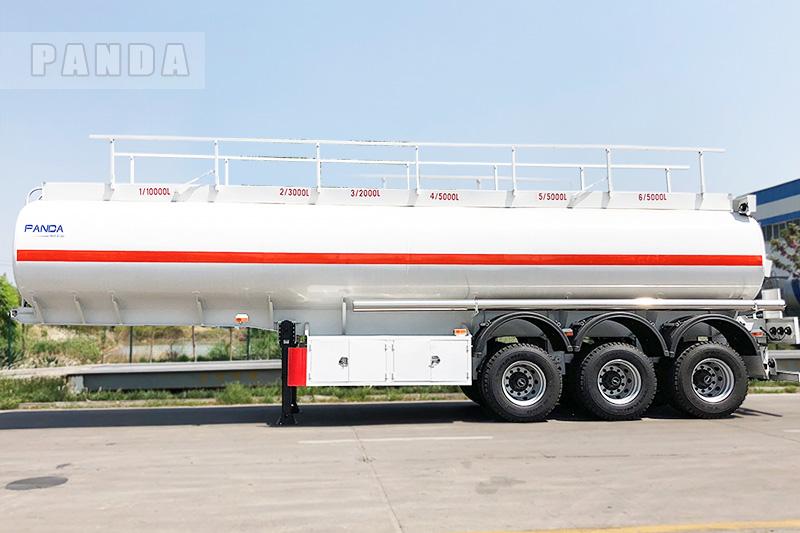
The most commonly used tank trailers are 30KL, 40KL, and 45KL.
45,000 liters fuel tank trailer

Panda Mech
If you’re sourcing a fuel tanker, Panda Mech manufactures 30,000–60,000-litre fuel tank trailers with customizable compartments, materials, and compliance options. If you tell us your target capacity, axle/GVW limits, and loading/unloading preference, we can suggest a spec that actually fits your route and regulations. We also provide LPG tank trailers for applicable projects.
FAQ
Why does tanker truck capacity vary even for the same ‘45,000-litre’ spec?
Because listed volume isn’t the only limit—usable/legal capacity depends on axle/GVW rules, compartments, and liquid density.
Is 60,000 litres always legal for a fuel tank trailer?
Not always. 60KL usually requires the right axle setup, GVW compliance, and sometimes permits, depending on your route and market.
Tanker capacity in litres vs gallons—what’s the #1 mistake buyers make?
Confirm litres + US gallons + Imp gallons together. The biggest mistake is mixing US gallons with Imp gallons.
Truck fuel tank capacity in litres—does this mean the tanker’s cargo tank?
No. It refers to the truck/tractor’s own fuel tank, not the tanker’s cargo tank. This page is about tanker cargo capacity.